
 Shivam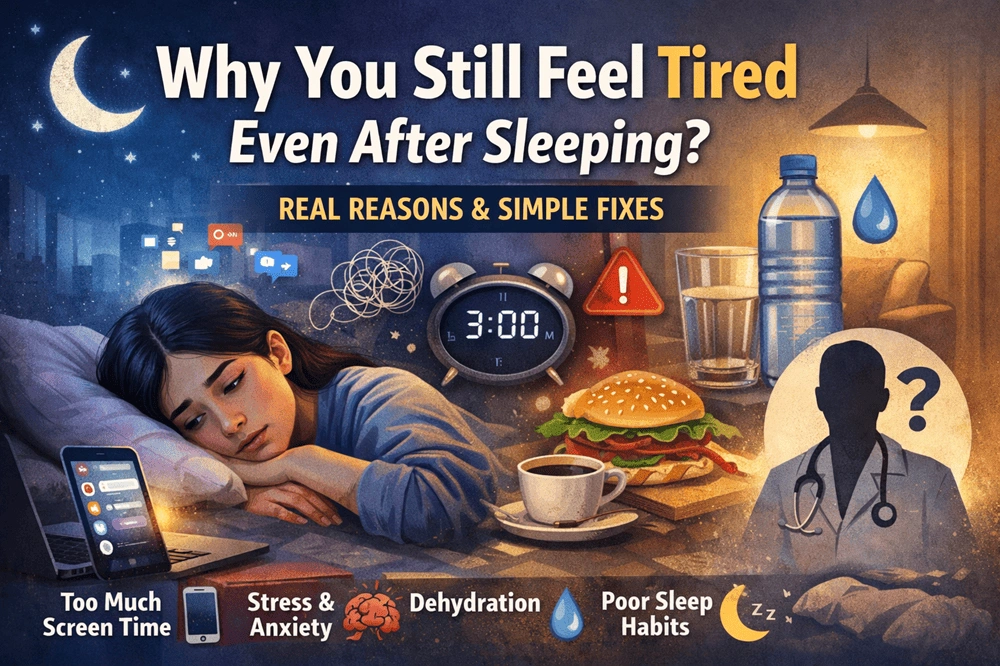
You went to bed on time.
You slept for 7-8 hours.
And still… You wake up tired, foggy, and dragging through the day.
If this sounds like you, you’re not alone.
Feeling tired isn’t always about how long you sleep – it’s often about how you live, what your body needs, and how deeply you actually rest.
Below are the most common reasons (with easy fixes).
Screen Time: Your Brain Never Fully “Shuts Down”
Scrolling before bed feels relaxing, but it actually wakes your brain up.
Phones, TVs, laptops, tablets:
-
delay melatonin (sleep hormone)
-
make your brain stay alert
-
reduce deep, quality sleep
Blue light = fake daylight for your brain.
What to do
-
Stop screens 45-60 minutes before bed
-
Use night mode or blue-light filter after sunset
-
Avoid checking work emails or stressful content at night
-
Try replacing screens with:
-
light reading
-
journaling
-
stretching
-
calming music
-
Small change. Big difference.
Stress: Your Body Sleeps, But Your Mind Doesn’t
When you go to bed stressed, your brain stays in “alert mode”.
Stress increases cortisol – the hormone that keeps you awake and restless.
You may be sleeping… but not resting.
Signs stress is draining your energy
-
waking up between 2-4 AM
-
overthinking at night
-
jaw clenching or teeth grinding
-
headaches, tight shoulders, irritability
What to do
-
Write down worries before bed (brain dump)
-
Try 5 minutes of slow breathing (inhale 4s, exhale 6–8s)
-
Keep a simple bedtime routine
-
Reduce caffeine after 2 PM
You don’t need perfection – just consistency.
Dehydration: Low Water = Low Energy
Even mild dehydration can make you feel:
-
tired
-
dizzy
-
heavy
-
foggy
Your blood becomes thicker, and your heart works harder – which makes you feel exhausted.
What to do
-
Aim for 6-8 glasses daily (more if hot or you exercise)
-
Drink a glass of water first thing in the morning
-
Limit sugary drinks — they dehydrate more
-
Notice the color of your urine:
-
pale yellow = good
-
dark yellow = drink water
-
Simple habit. Huge impact.
Poor Sleep Habits: Your Schedule Is Confusing Your Body
Quality > quantity.
Common habits that ruin sleep:
-
sleeping and waking at different times daily
-
long daytime naps
-
eating heavy meals late at night
-
too much caffeine or energy drinks
-
sleeping in a noisy, bright, or hot room
What to do
-
Sleep and wake at the same time every day
-
Keep naps under 20-30 minutes
-
Keep your room:
-
dark
-
quiet
-
cool
-
-
Avoid heavy meals 2-3 hours before bed
-
Keep caffeine for morning only
Your body loves routine.
Hidden Health Reasons (You Might Not Realize)
Sometimes tiredness isn’t just lifestyle – it may be something deeper.
Common possibilities:
-
anemia (low iron)
-
thyroid issues
-
vitamin D or B12 deficiency
-
sleep apnea (snoring + poor breathing at night)
-
depression or anxiety
-
uncontrolled diabetes
-
certain medications
These don’t mean something is “wrong” – but they should be checked.
When Should You See a Doctor?
Book a check-up if you have:
-
extreme tiredness for more than 2-3 weeks
-
loud snoring or choking during sleep
-
sudden weight loss or gain
-
hair loss, dry skin, cold hands
-
chest pain, shortness of breath, or fainting
-
memory problems or mood changes
-
sleep that never feels refreshing – no matter what you try
A simple blood test or evaluation can give answers.
Quick Checklist: Fix Your Tired Mornings
Start with these small, realistic steps:
- Fixed sleep time
- No screens 1 hour before bed
- Drink water through the day
- Cut caffeine after 2 PM
- Light dinner, earlier
- Manage stress gently (breathing, journaling, routine)
- See a doctor if tiredness doesn’t improve
Don’t try everything at once, choose one change per week.
Final Thought
Feeling tired all the time isn’t “normal”.
It’s your body saying:
“Something needs attention.”
Listen, adjust gently, and track what improves. With small, steady habits, your mornings can feel lighter, clearer, and more energetic again.