 Shivam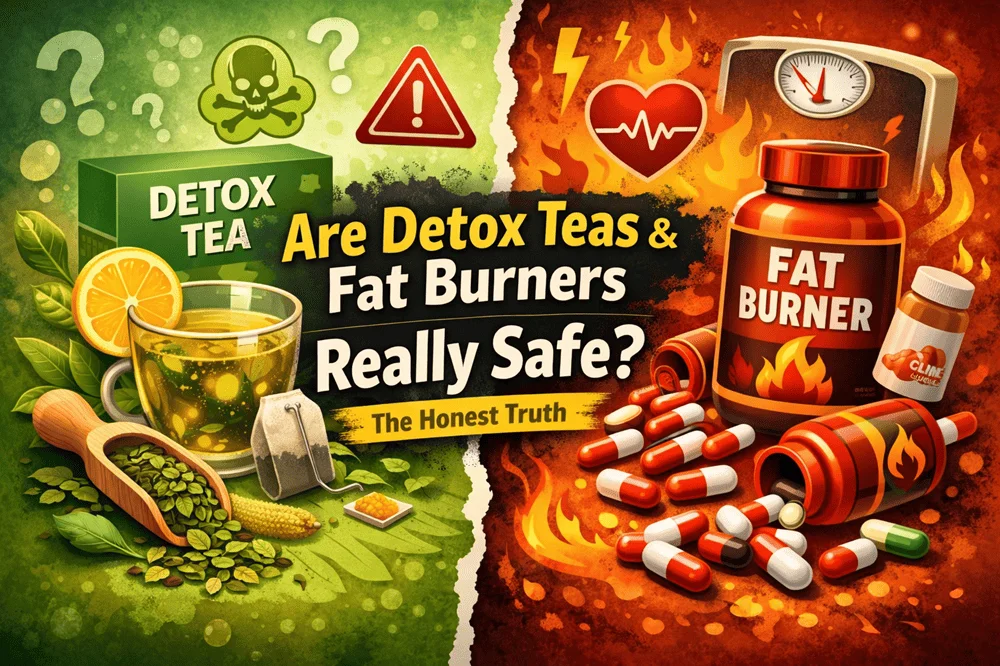
People buy detox teas and fat burners hoping for quick weight loss, flat stomachs, and “clean” bodies—without changing diet or habits. The marketing sounds convincing: flush toxins, boost metabolism, burn fat while you sleep.
But do these products actually work? And more importantly – are they safe?
Let’s break the myths, facts, side effects, and safer natural alternatives you can actually trust.
Why Detox Teas & Fat Burners Are So Popular
The appeal is simple:
-
No strict diet
-
No heavy exercise
-
Promises fast results
-
Influencer endorsements
-
“Natural” label creates false safety
I’ve personally seen friends lose 2–3 kg in a week using detox teas, only to gain it all back (plus stomach issues). That’s your first red flag.
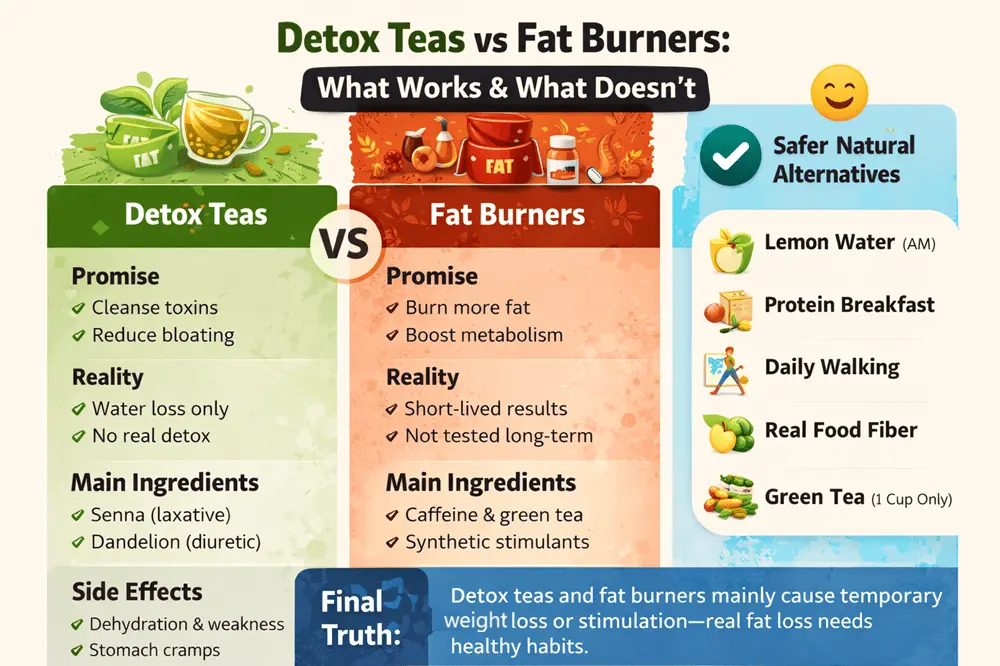
What Detox Teas Claim vs Reality
What They Claim
-
Remove toxins from your body
-
Reduce bloating instantly
-
Improve digestion
-
Help with fat loss
What Actually Happens
Most detox teas contain:
-
Laxatives (senna, cascara)
-
Diuretics (dandelion, caffeine)
-
Herbs that increase bowel movement
➡️ You lose water weight, not fat.
➡️ Your body already detoxes via liver and kidneys.
Truth: Detox teas don’t detox your body. They dehydrate it.
Hidden Side Effects of Detox Teas
Many users don’t read the ingredient list carefully.
Common side effects include:
-
Diarrhea
-
Dehydration
-
Electrolyte imbalance
-
Stomach cramps
-
Dependence on laxatives
-
Weakness and dizziness
Long-term use can damage gut health and slow natural digestion.
Fat Burners: What Works and What Doesn’t
What Fat Burners Promise
-
Faster metabolism
-
Appetite suppression
-
Increased energy
-
Targeted fat loss
What They Usually Contain
-
High caffeine
-
Green tea extract
-
Yohimbine
-
Synephrine
-
Synthetic stimulants
These do not burn fat directly. They only:
-
Increase heart rate
-
Suppress appetite temporarily
-
Make you feel energetic
Once you stop → weight returns.
Dangerous Side Effects of Fat Burners
This is where things get serious.
Reported issues include:
-
Heart palpitations
-
Anxiety and panic attacks
-
Insomnia
-
High blood pressure
-
Hormonal imbalance
-
Liver stress
People with thyroid issues, PCOS, or heart conditions are at higher risk—often without knowing it.
The Biggest Myth: “Natural = Safe”
This is misleading.
-
Cyanide is natural.
-
Tobacco is natural.
-
Some herbs interact badly with medications.
Many detox teas and fat burners are not FDA-regulated strictly, meaning:
-
Dosages vary
-
Ingredients may be under-reported
-
Long-term safety isn’t tested
What Actually Works for Fat Loss (Backed by Reality)
Here’s the honest part most brands won’t tell you.
What Works
-
Calorie awareness (not starvation)
-
Protein-rich meals
-
Strength training
-
Walking daily
-
Sleep consistency
-
Hydration
What Doesn’t
-
Overnight detoxes
-
“Fat-melting” pills
-
Starving + supplements
-
Long tea cleanses
Safer Natural Alternatives (No Gimmicks)
If your goal is fat loss + better digestion, try these instead:
1. Warm Water + Lemon (Morning)
-
Supports digestion
-
Reduces bloating naturally
-
No side effects
2. High-Protein Breakfast
-
Keeps you full longer
-
Reduces cravings
-
Stabilizes blood sugar
3. Green Tea (1–2 Cups Only)
-
Mild metabolism boost
-
Antioxidants
-
Avoid excess caffeine
4. Fiber from Real Food
-
Fruits, vegetables, oats, seeds
-
Improves gut health
-
Natural detox through digestion
5. Daily Walking (30–45 Minutes)
-
Burns fat steadily
-
Improves insulin sensitivity
-
Sustainable long-term
If You Still Want Supplements, Read This First
Before buying:
-
Check ingredient transparency
-
Avoid laxatives and extreme stimulants
-
Never stack multiple fat burners
-
Don’t use continuously for months
-
Consult a doctor if you have health issues
Supplements should support habits, not replace them.
Final Verdict: Are Detox Teas & Fat Burners Safe?
Short answer:
They are mostly unnecessary and sometimes harmful.
-
Detox teas = water loss + gut stress
-
Fat burners = temporary stimulation + side effects
Real fat loss comes from consistency, not shortcuts.
If something promises extreme results with zero effort—your body usually pays the price later.