 Shivam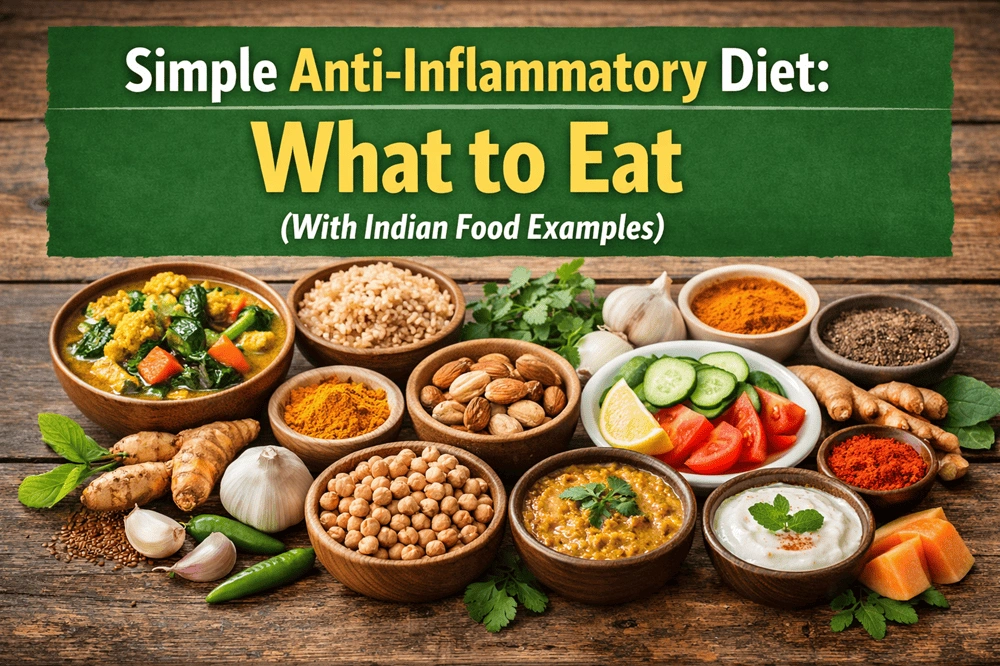
Inflammation is your body’s natural defense system. It helps fight infections and heal injuries.
But when inflammation stays for too long, it becomes harmful.
Chronic inflammation is linked to problems like:
-
joint pain
-
weight gain and belly fat
-
diabetes
-
heart disease
-
skin issues
-
fatigue and low energy
The good news:
Food can either increase inflammation — or calm it down.
This guide explains a simple anti-inflammatory diet, using everyday Indian food examples — without complicated ingredients or expensive supplements.
What is an Anti-Inflammatory Diet?
An anti-inflammatory diet focuses on:
-
whole, natural foods
-
fiber-rich meals
-
healthy fats
-
spices and herbs
-
less sugar and processed foods
It is not a strict “diet plan”.
It is a long-term eating pattern that reduces stress on your body and supports healing.
Key Principles of an Anti-Inflammatory Diet
1. Eat More Real, Unprocessed Food
The closer food is to its natural form, the better.
Examples
-
fresh fruits (apple, guava, papaya, berries, orange)
-
vegetables (bhindi, lauki, tinda, carrot, beetroot, cabbage, spinach)
-
whole grains (brown rice, jowar roti, bajra roti, whole wheat roti)
-
pulses and beans (moong dal, rajma, chole, masoor dal)
Highly processed foods often contain sugar, refined oils, and additives — all triggers for inflammation.
2. Include Healthy Fats
Healthy fats protect cells and reduce swelling inside the body.
Good choices (Indian context)
-
nuts: almonds, walnuts, peanuts (unsalted, roasted)
-
seeds: flax seeds, chia seeds, pumpkin seeds
-
oils: mustard oil, cold-pressed groundnut oil, extra virgin olive oil
-
natural fats: coconut (fresh), homemade ghee in moderation
Avoid reheating oil again and again — it becomes toxic.
3. Increase Fiber-Rich Foods
Fiber feeds good gut bacteria.
A healthy gut = less inflammation.
Examples you can add daily
-
dal and legumes
-
whole grains
-
fruits with peel (where possible)
-
vegetables in sabzi, soups, or salads
4. Use Indian Spices — They Are Powerful
Spices are not just for taste; many have medicinal properties.
Best anti-inflammatory spices
-
turmeric (haldi)
-
ginger (adrak)
-
garlic (lahsun)
-
black pepper (kali mirch)
-
cinnamon (dalchini)
-
cumin (jeera)
-
fenugreek (methi)
A simple habit:
Add turmeric + black pepper to dal or sabzi regularly.
What to Eat on an Anti-Inflammatory Diet (Simple Indian Meal Ideas)
Breakfast
Better options:
-
vegetable poha with peanuts
-
moong dal chilla with chutney
-
oats cooked with milk + nuts
-
idli with sambar
-
vegetable upma
-
curd + fruit + seeds
Avoid sugary biscuits, sweetened cornflakes, and deep-fried snacks.
Lunch
Balanced plate idea
Try this formula:
-
½ plate vegetables
-
¼ plate whole grain (roti/brown rice)
-
¼ plate dal, chole, rajma, or paneer
-
salad + buttermilk
Examples:
-
roti + dal tadka + bhindi sabzi
-
brown rice + rajma + salad
-
jowar roti + lauki sabzi + moong dal
Dinner
Keep it light and simple
-
khichdi with vegetables
-
dal + sabzi + roti
-
paneer bhurji + salad
-
vegetable soup + multigrain roti
Try to avoid heavy, fried, creamy, or very spicy food at night.
Foods to Limit (Because They Trigger Inflammation)
1. Refined Sugar and Sweets
-
soft drinks
-
cakes, pastries
-
packaged juices
-
white sugar in tea/coffee
2. Deep-Fried Foods
-
pakoras
-
samosa
-
bhatura
-
chips and namkeen
3. Refined Carbs
-
white bread
-
white rice (too often)
-
maida-based foods
4. Processed & Packaged Foods
-
instant noodles
-
ready-to-cook gravies
-
processed meats
-
flavored yogurts with sugar
Helpful Lifestyle Habits (Beyond Food)
Diet works best when lifestyle supports it.
Simple habits to add
-
drink enough water
-
walk 20-30 minutes daily
-
sleep 7-8 hours
-
manage stress (breathing, meditation, prayer, journaling)
-
avoid smoking and limit alcohol
Final Thoughts: Start Small, Stay Consistent
You don’t need a fancy “diet plan”.
Start with small, practical changes:
-
add vegetables to every meal
-
choose whole grains instead of refined
-
reduce packaged foods
-
cook simple, home-made meals
-
use Indian spices wisely
Over time, your body may feel lighter, more energetic, and calmer — because inflammation reduces quietly in the background.